
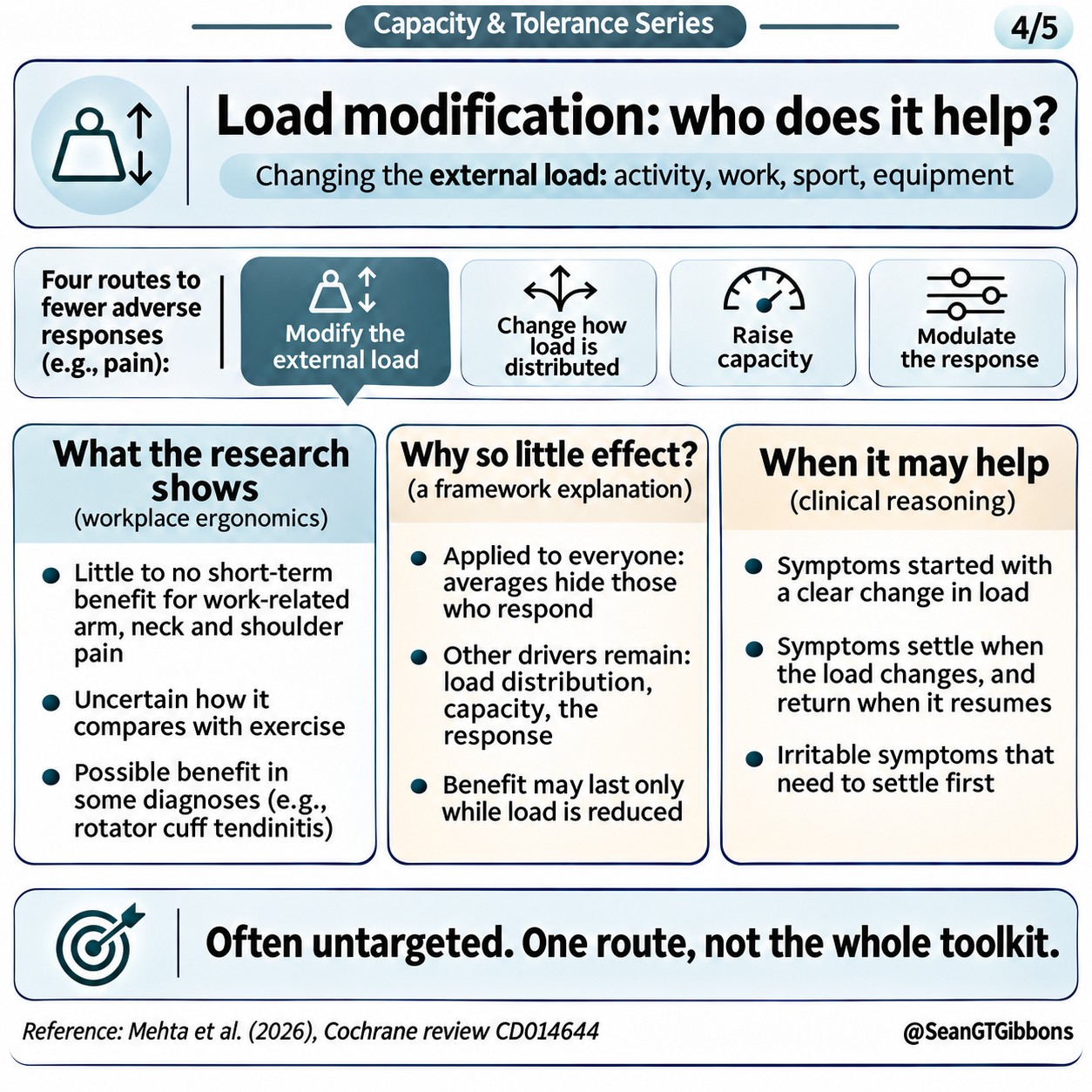
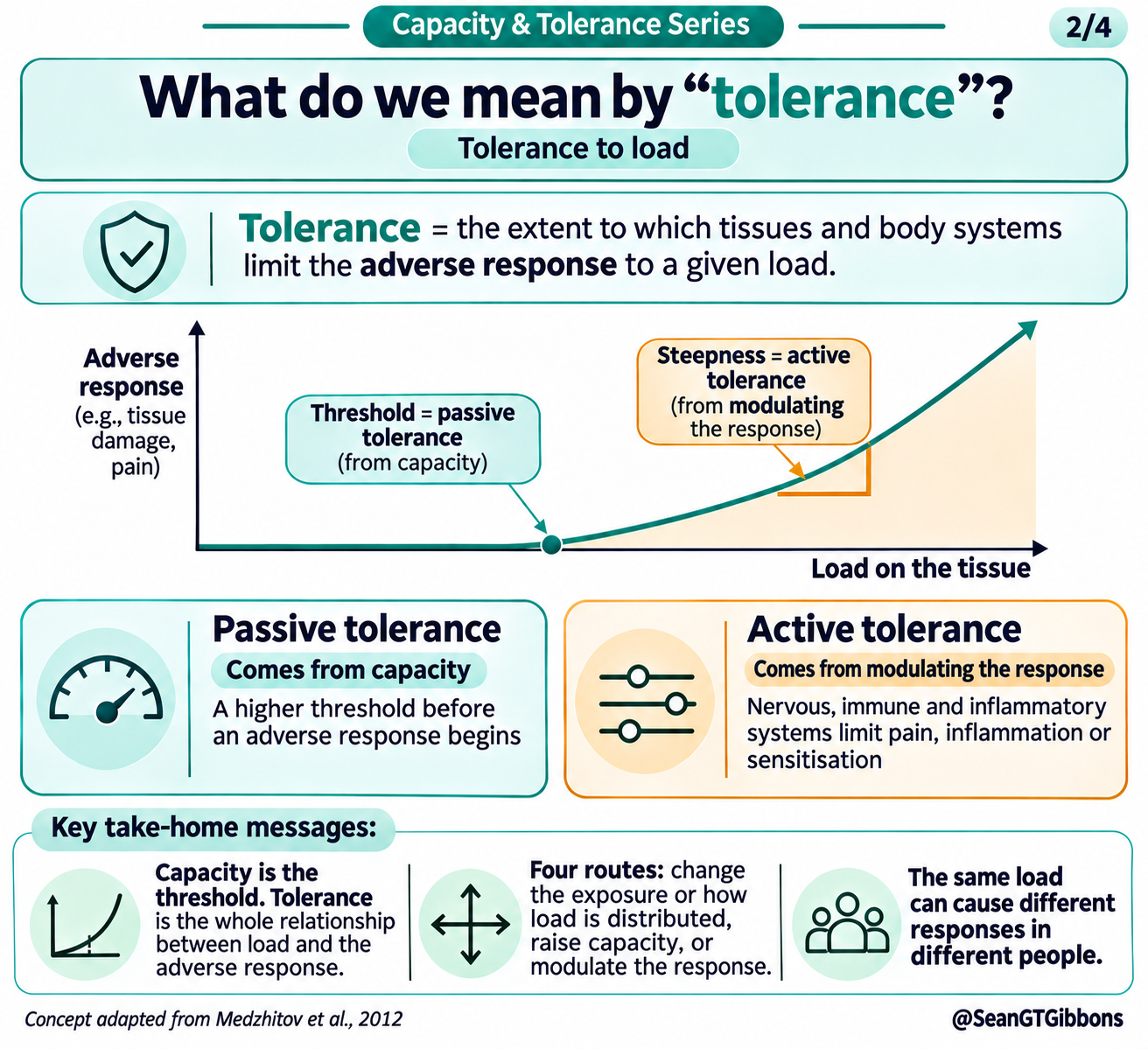
Load modification means changing the external load: the activity, work or sport demands, equipment or environment. It’s one of four routes to fewer adverse responses, alongside changing how load is distributed, raising capacity, and modulating the response.
What the research shows
A recent Cochrane review of workplace ergonomic interventions for work-related arm, neck and shoulder complaints found little to no short-term benefit for pain, and probably little to no difference in function, sick leave or recovery. How it compares with exercise is uncertain. There may be benefit in some diagnoses, such as rotator cuff tendinitis.
Two important caveats:
• These trials treated people who already had symptoms. This isn’t an argument against preventive ergonomics.
• “Ergonomics” often mixes two different things: changing what is done (equipment, furniture, rest breaks) and changing how it’s done (posture and technique training). The second is really about how load is distributed.
Why so little effect?
When an intervention is applied to everyone, the people who respond are hidden in the average. Musculoskeletal pain usually has more than one driver, and load modification doesn’t directly address the others: how load is distributed, capacity, and the response. Its benefit may also last only while the load stays reduced.
When it may help (clinical reasoning, not established criteria)
• Symptoms started with a clear change in load
• Symptoms settle when the load changes, and return when it resumes
• Irritable symptoms that need to settle before other treatment
If symptoms return every time the load resumes, that shows the load matters, but it also suggests load modification alone isn’t enough. Combining it with another route is usually the next step.
It also has downsides: reduced load can lower capacity, may reinforce fear of movement, and can mean losing participation in work or sport. And some people need more load, not less.
Summary: Load modification is often untargeted. It is one possible route to management, not the whole toolkit. There are many other possible treatments.
Reference: Mehta et al. (2026), Cochrane Database of Systematic Reviews, CD014644.

Leave A Comment