
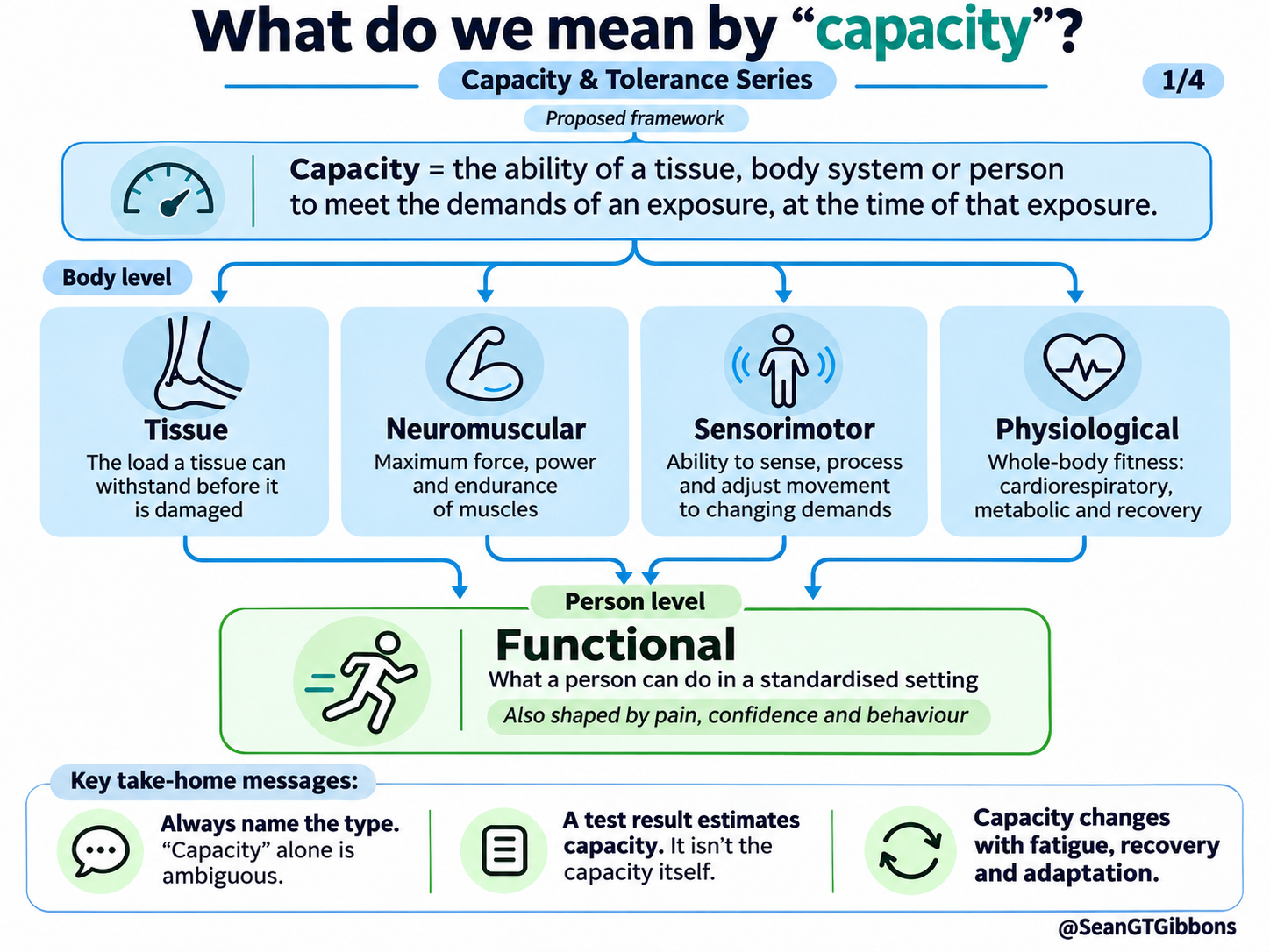
“Tolerance” and “capacity” are often used as if they mean the same thing. They don’t.
A proposed definition:
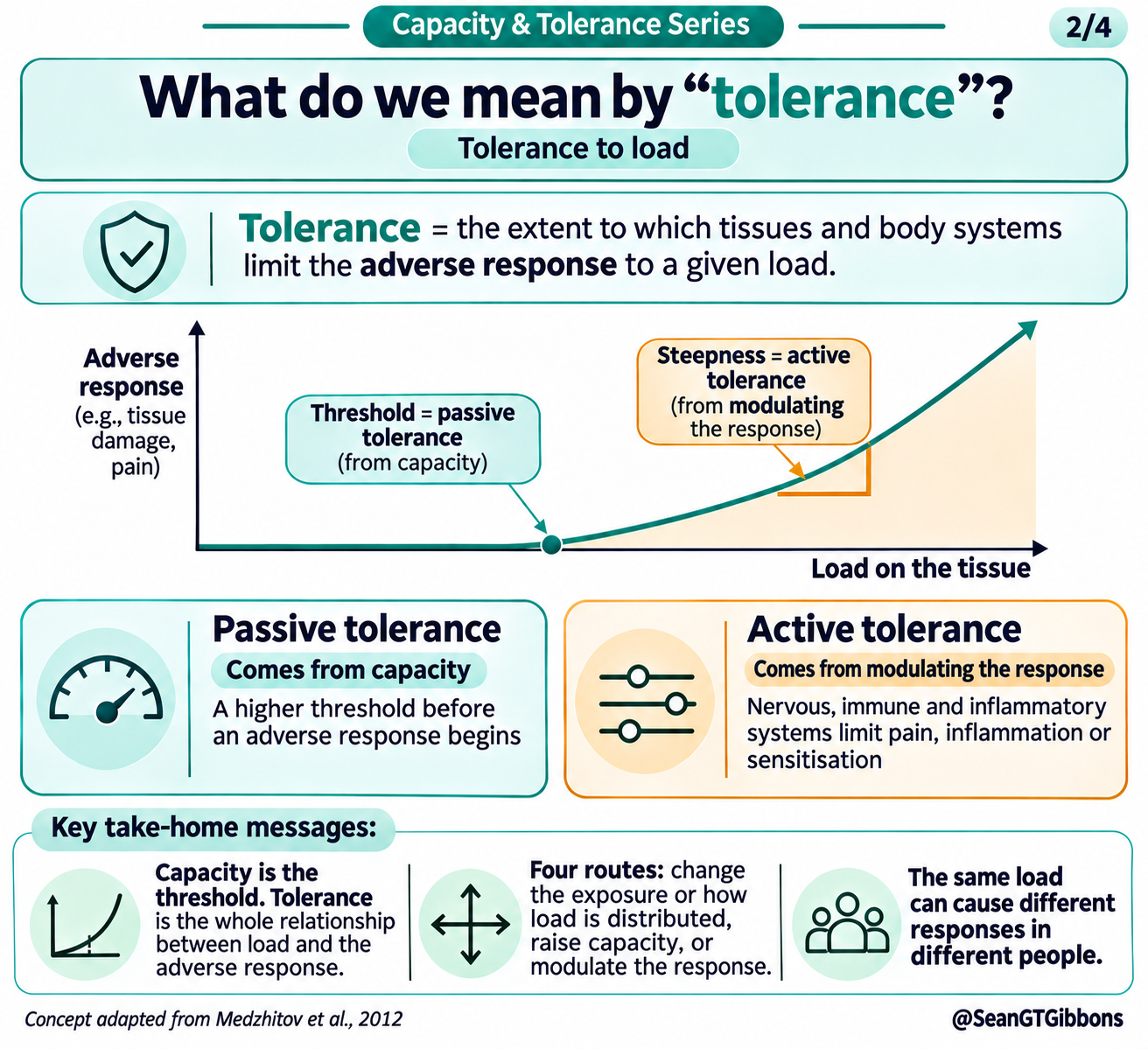
Tolerance = the extent to which tissues and body systems limit the adverse response to a given load.
Think of it as the relationship between load and the adverse response, not a single number. It has two parts:
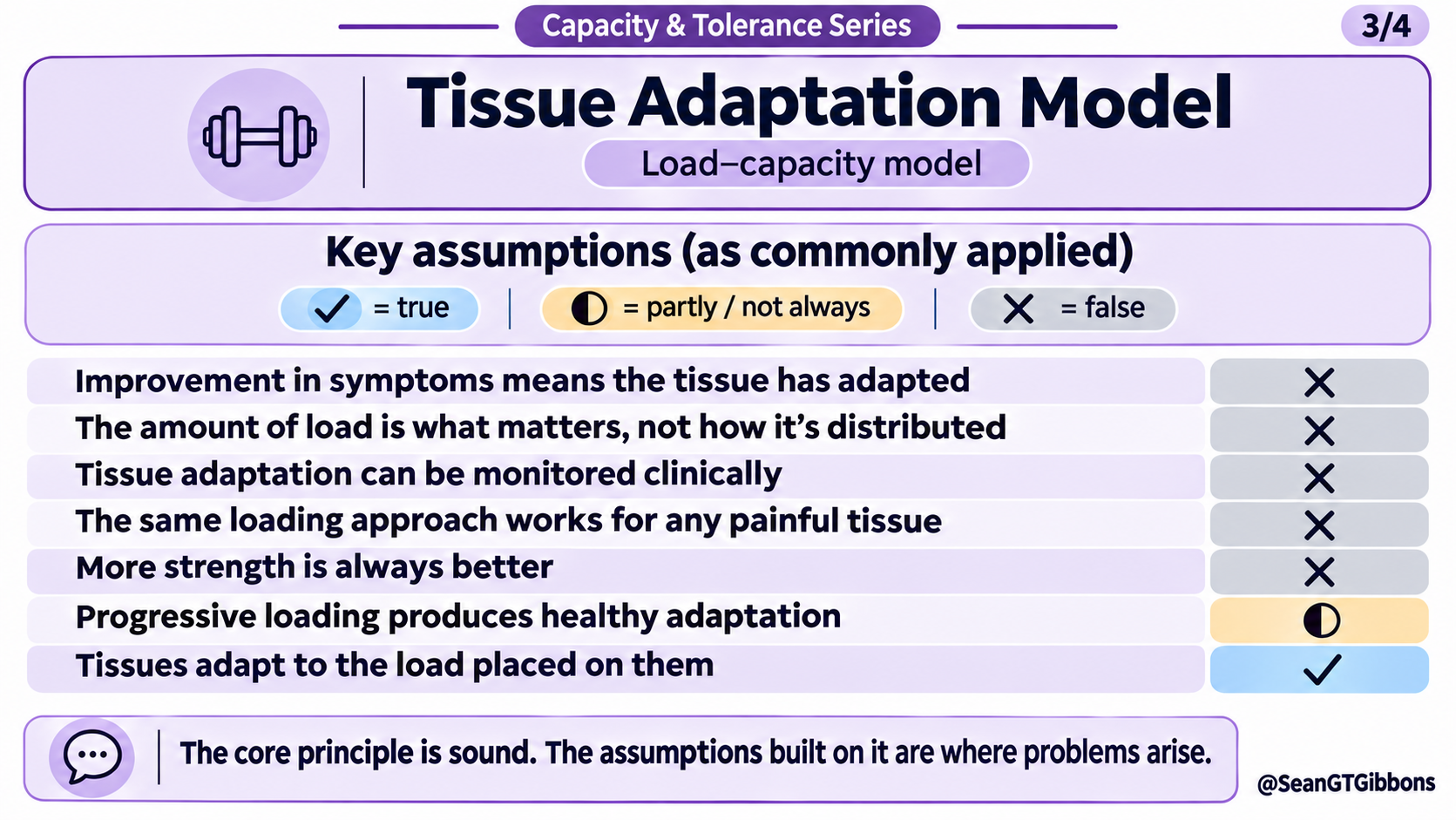
- Passive tolerance – the threshold where an adverse response begins. It comes from capacity (post 1/4), such as tissue capacity.
- Active tolerance – how steeply the response rises once that threshold is passed. It comes from how the nervous, immune and inflammatory systems modulate the response. A sensitised system can turn an ordinary load into a painful one, even when the tissue itself hasn’t changed.
“Adverse response” is used deliberately. It includes tissue damage, but also pain, inflammation and sensitization, which can occur without damage.
Why it matters clinically:
- Capacity is the threshold. Tolerance is the whole relationship between load and the adverse response.
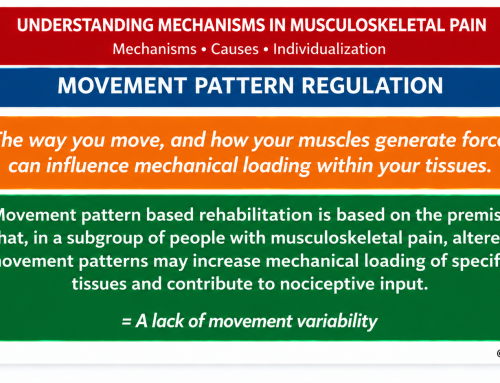
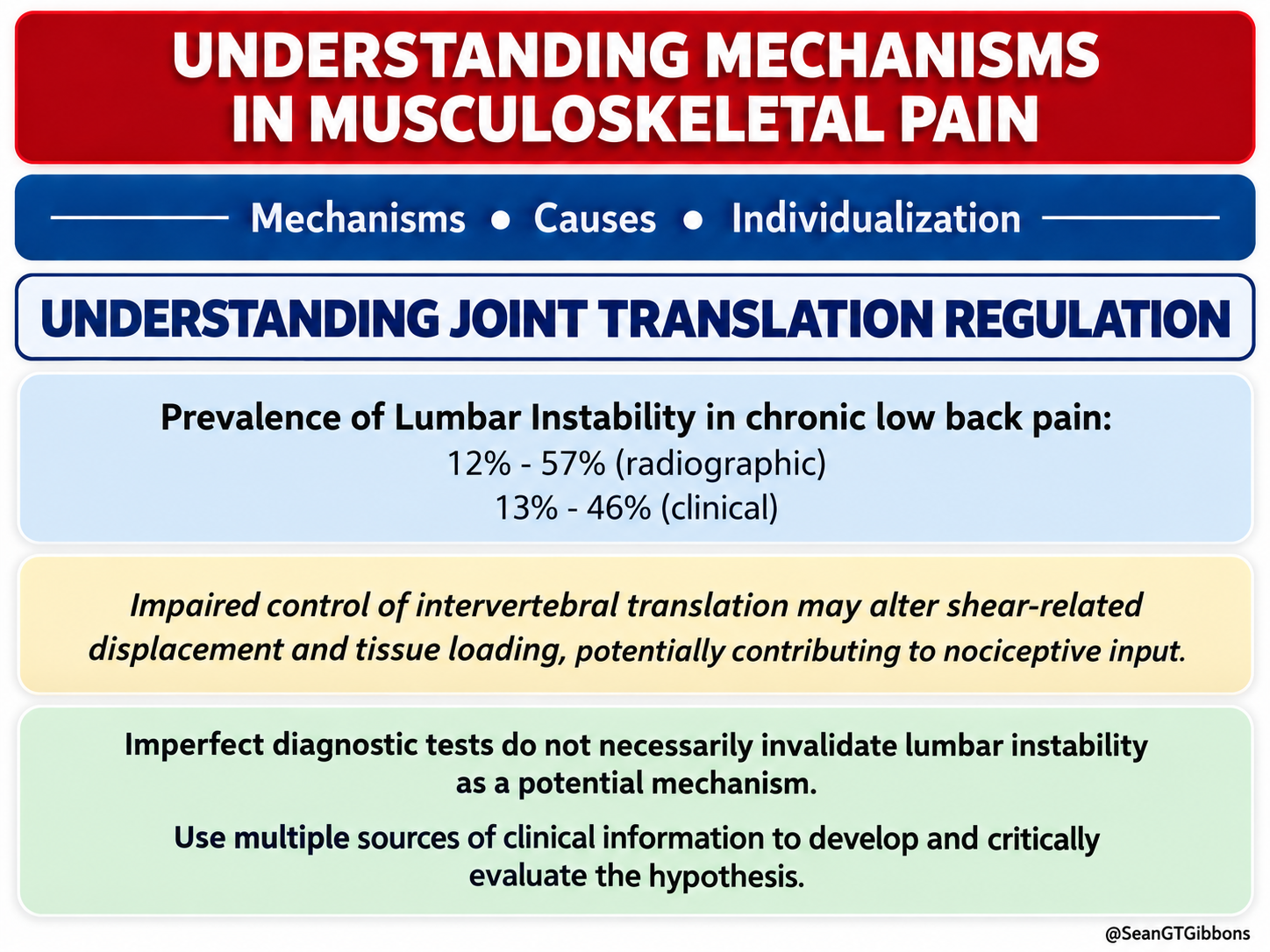
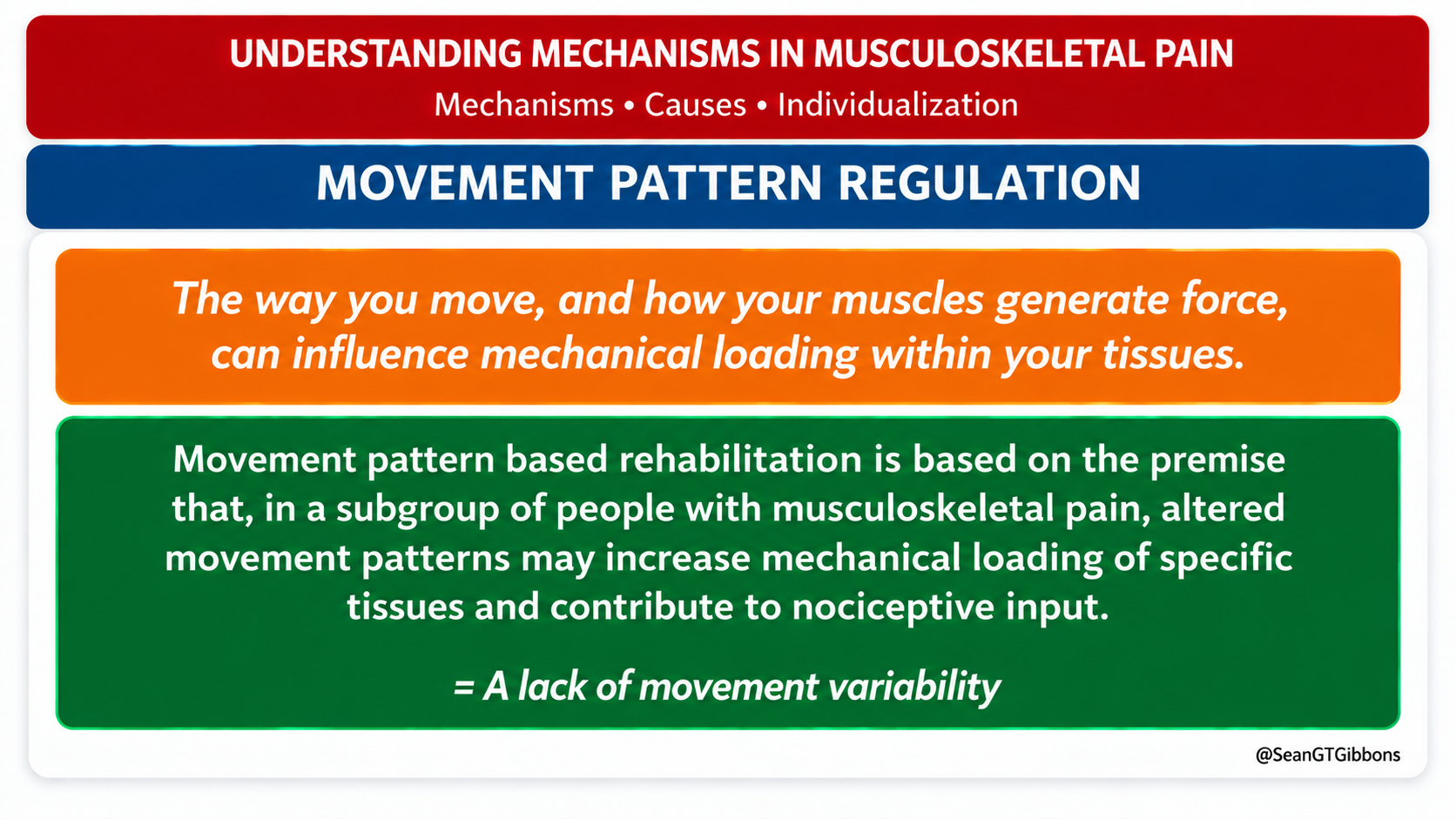
- There are four routes to fewer adverse responses: change the exposure, change how load is distributed (e.g., movement pattern or joint translation regulation), raise capacity, or modulate the response.
- The same load can cause different responses in different people.
The first two routes change the load. The last two change the tolerance.
When someone isn’t responding to rehabilitation, it’s worth asking which part is the problem: the exposure, how load reaches the tissue, a low threshold, an over-reactive response, or a combination.
How would you decide which of these (or combinations) are involved? There are no “special tests” so how would you use your clinical reasoning to help guide you?
The idea is adapted from “disease tolerance” in immunology, where hosts protect themselves not only by reducing a burden but by limiting its negative impact (Medzhitov et al., 2012).

Leave A Comment