
Sean Gibbon’s Blog
I decided to start this blog after recent course feedback. On the course we discussed some of the issues in the physiotherapy profession, the complexity of pain, research gaps, ideas, clinical reasoning, clinical top tips and case studies. So this blog was born to share this. It is my opinion that chronic pain is not simple and that most people will do better with an individualized approach rather than simple strengthening. I look forward to sharing some case studies to highlight the use of Motor Behavior Therapy, and the newer testing and rehab strategies not everyone is familiar with (e.g., primitive reflex inhibition, postural reflex facilitation & cranial nerve treatment). My research ideas have largely come from problem solving with clients and continue to evolve. I’m sure it will evolve to include other musings!
The model has advanced quite a bit over the years into “Motor Behavior Therapy” (MBT). This is a clinical reasoning framework for the personalized management of musculoskeletal pain. The key themes are:
- Mechanisms
- Causation
- Individualization
- Barriers
Making Sense of Complexity


A Rehab Direction for All Patients
Motor Behavior Therapy is allows the therapist to assess the dominant mechanisms contributing to an individuals’ presentation and use clinical reasoning to prioritize starting points and problem solving. The MBT framework has identified key barriers for progression which can be used for stratification or sub-classification.
Motor Behavior Therapy allows the therapist to integrate their current knowledge and apply it within this framework, while adding new core skills to improve patient treatment.
Latest Posts
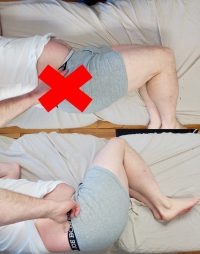
Posterior Gluteus Medius (AKA The Clam): Don’t ban it, just do it better
Exercises for posterior gluteus medius have been eloquently termed “the clam”. There are a few problems with the traditional clam: Piriformis is also a hip external rotator. It reportedly changes its [...]
Cross March Test for Midline Awareness Assessment in subject with very poor motor skill learning ability
The Cross March Test for midline awareness and body imagery was a test I developed about 20 years ago. I modeled it after the Fukuda Step Test. This test challenges someone's [...]
Asymmetrical Tonic Neck Reflex Assessment by the Schilder Test
The Asymmetrical Tonic Neck Reflex (ATNR) is a whole body reflex that is hypothesized to have a wide range of influence including: Musculoskeletal (cervical, shoulder girdle & upper limb, trunk, hip, [...]
Symmetrical Tonic Neck Reflex in High Functioning Student with Dyslexia
This is an example of a positive STNR in flexion and extension. Note: He was only asked to move his cervical spine into flexion and extension. He had 0% awareness that [...]