
The subjective complaint of low back pain during sitting is common in clinical practice, however this needs to be explored further. Many patients describe when in fact the task of “sitting” is completely fine. It is the task of standing from sitting that is the aggravating factor.
The kinematics of sit to stand has not been researched as much as trunk flexion, but there is some interesting research.
Here is a brief summary of the literature:
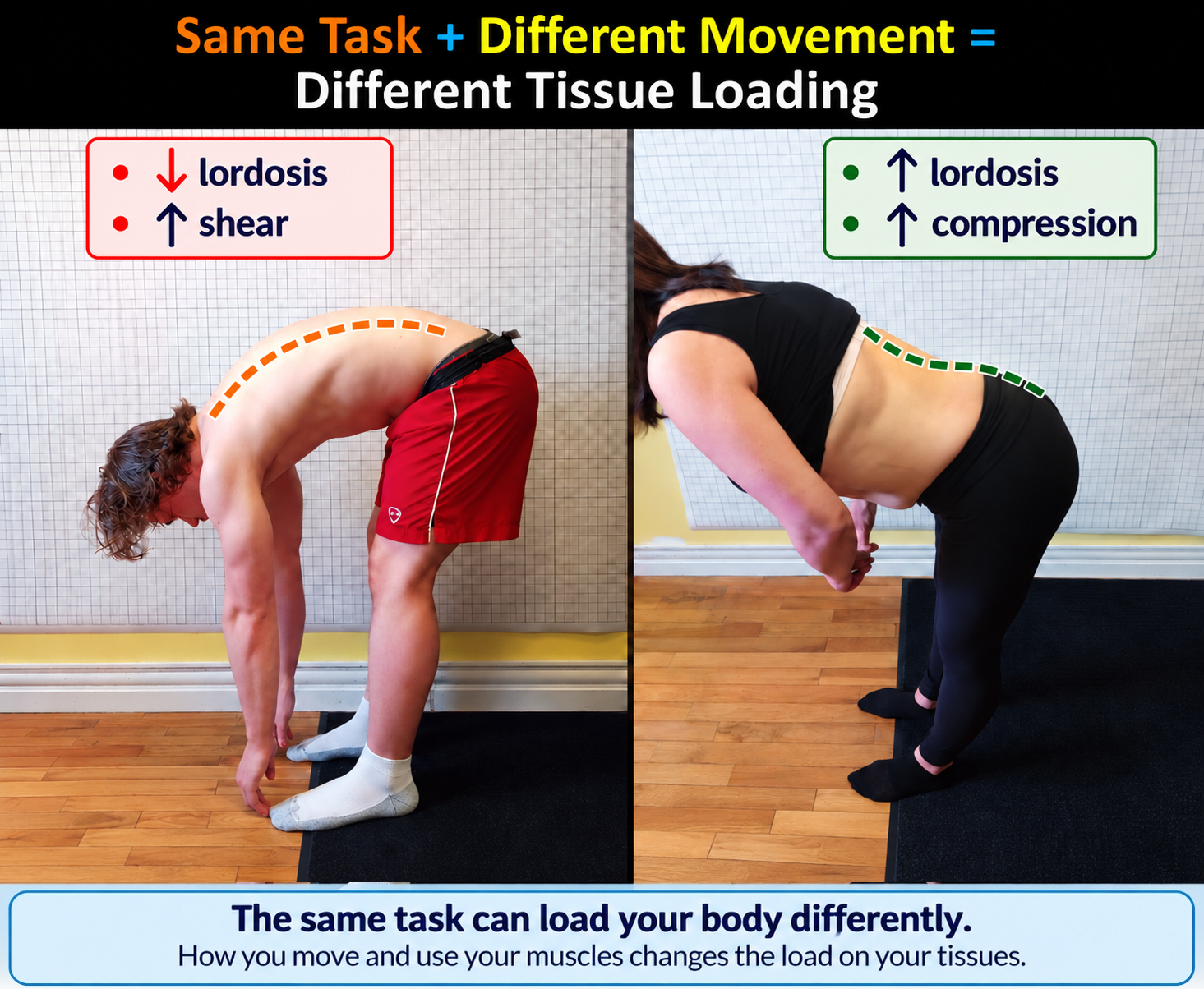
Sit-to-Stand: What Does the Research Tell Us About Altered Lumbar–Hip Movement Patterns?
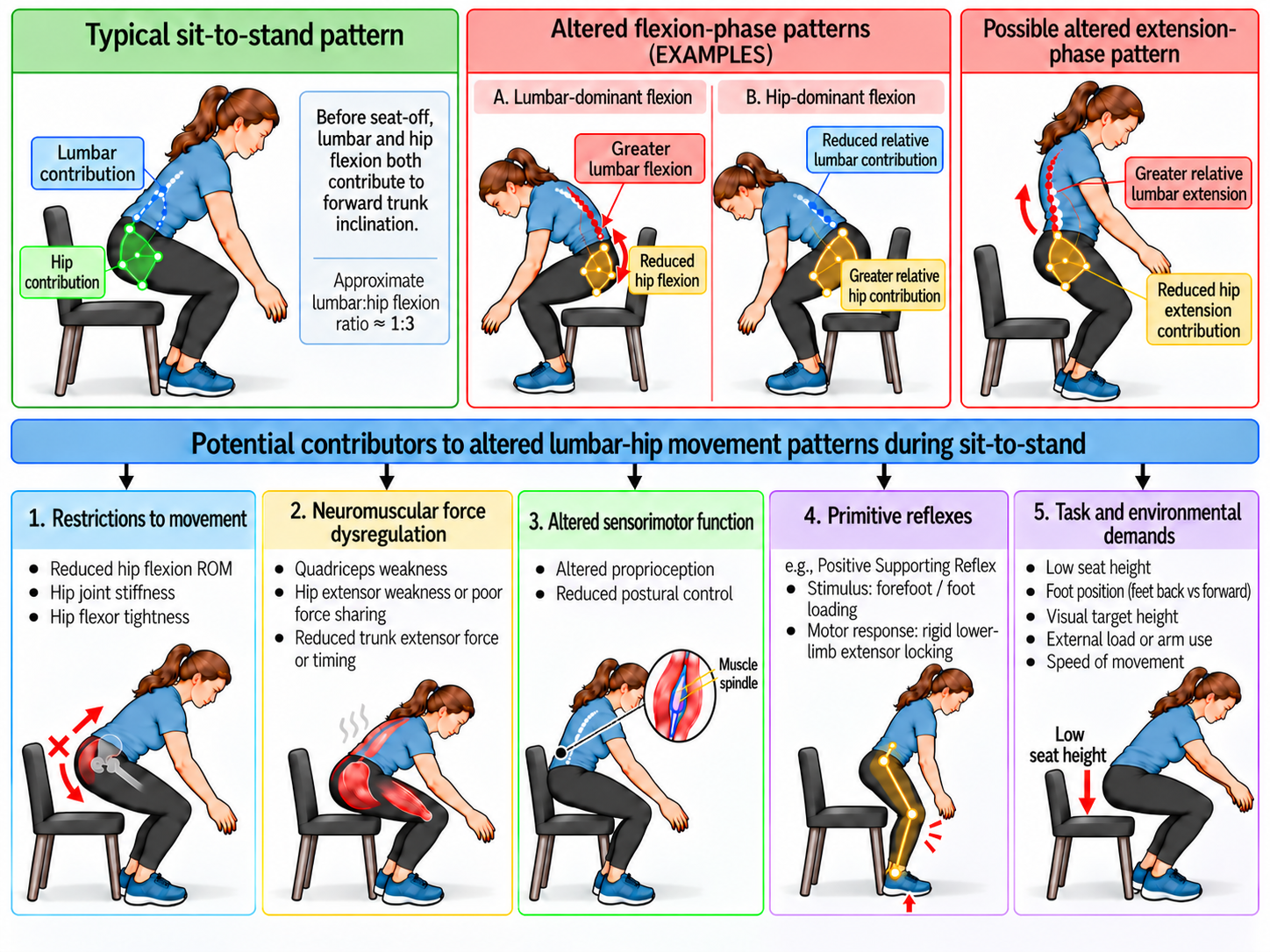
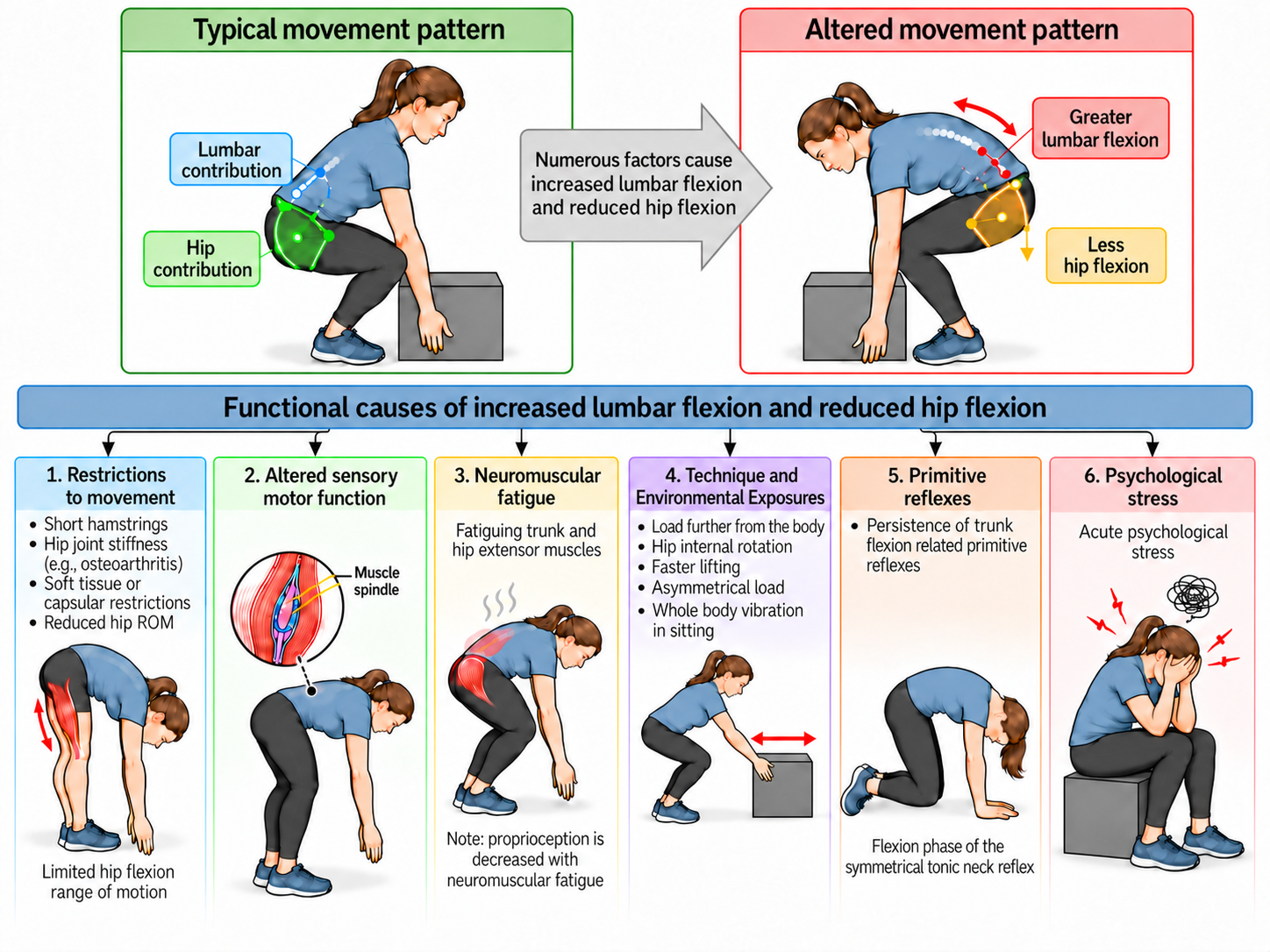
– Typical movement pattern: During the initial flexion phase of sit-to-stand (STS), the lumbar spine and hips both contribute to forward trunk inclination, with an approximate lumbar-to-hip flexion ratio of 1:3 reported in healthy young adults
– Movement patterns differ in people with low back pain: A systematic review identified reduced lumbar and hip mobility, slower movement, reduced velocity, and increased trunk movement variability in individuals with low back pain
– Reduced lumbar contribution: Some individuals with low back pain demonstrate reduced lumbar movement relative to the hips and altered lumbar–hip coordination
– Increased lumbar contribution: Other individuals, particularly those classified with lumbar flexion-plus-rotation movement impairments, demonstrate increased lumbar flexion during STS
– Movement restrictions: Individuals with hip osteoarthritis demonstrate altered hip and pelvic movement during STS, including reduced hip flexion and increased posterior pelvic tilt, suggesting compensatory movement strategies
– Seat height: A lower seat increases lumbar flexion during stand-to-sit in some studies, although other investigations have found no significant change in lumbar lordosis with altered seat height
– Foot position: Changing the position of the feet relative to the knees alters lumbar mechanical loading during STS; positioning the feet farther forward can increase L5–S1 joint torque compared with a feet-back position
– Visual guidance: Looking toward a lower visual target increases lumbar flexion during STS, whereas higher visual targets encourage different spinal movement strategies
– Movement technique: Changing the instructed STS technique between habitual, flexion-oriented, and extension-oriented strategies alters lumbar movement characteristics
– Regional spinal movement: Upper and lower lumbar regions contribute differently during STS, demonstrating that total lumbar movement does not fully describe how the spine is moving
– Neuromuscular impairments: Quadriceps weakness, altered hip extensor function, reduced trunk extensor capacity, and proprioceptive impairments are plausible contributors to altered STS movement patterns, but direct evidence linking these specific impairments to lumbar–hip angular contributions remains limited.
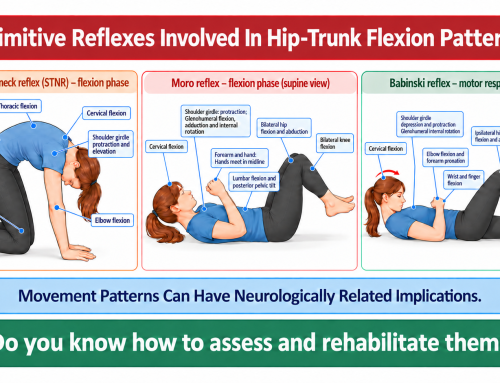
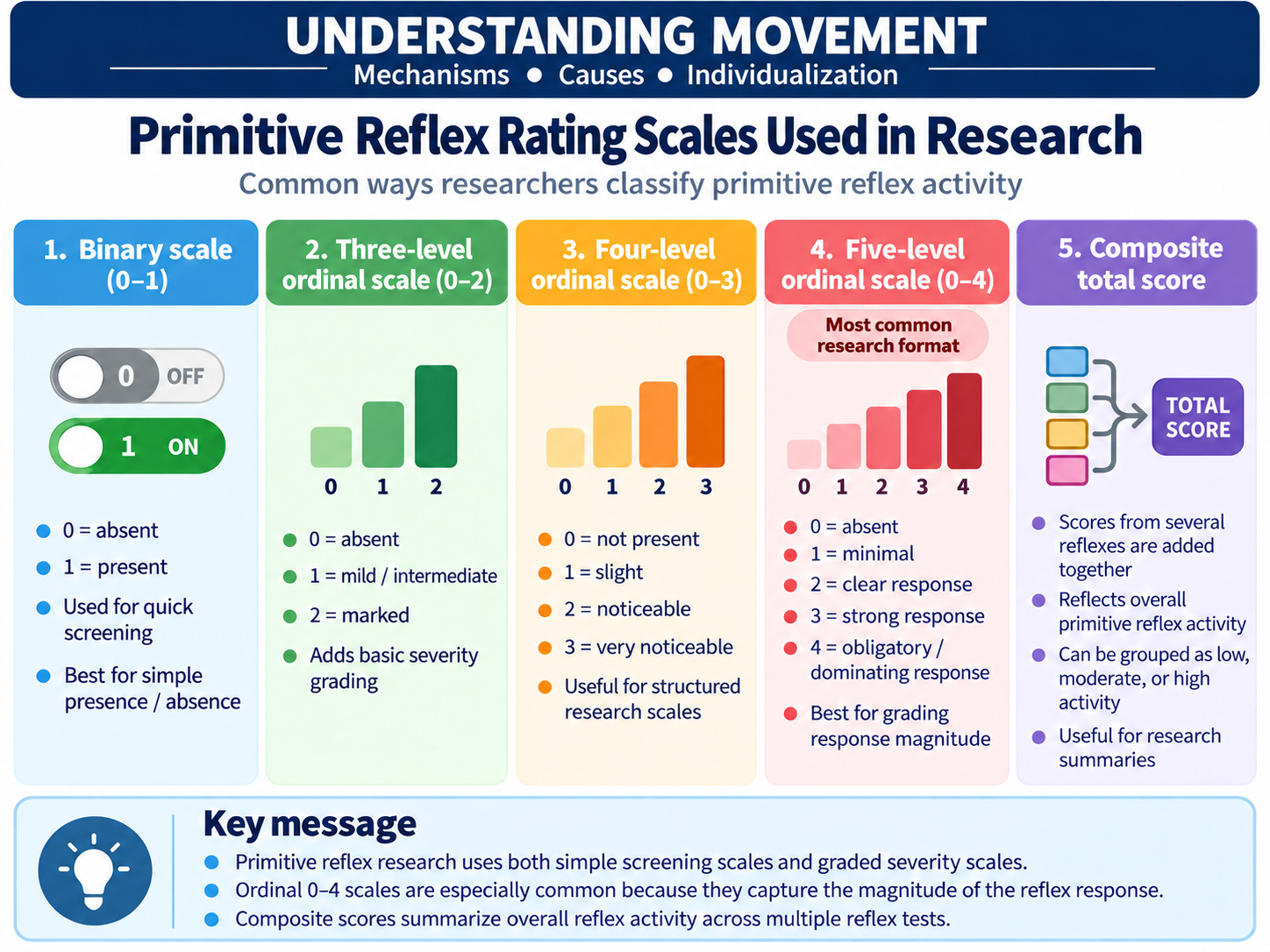
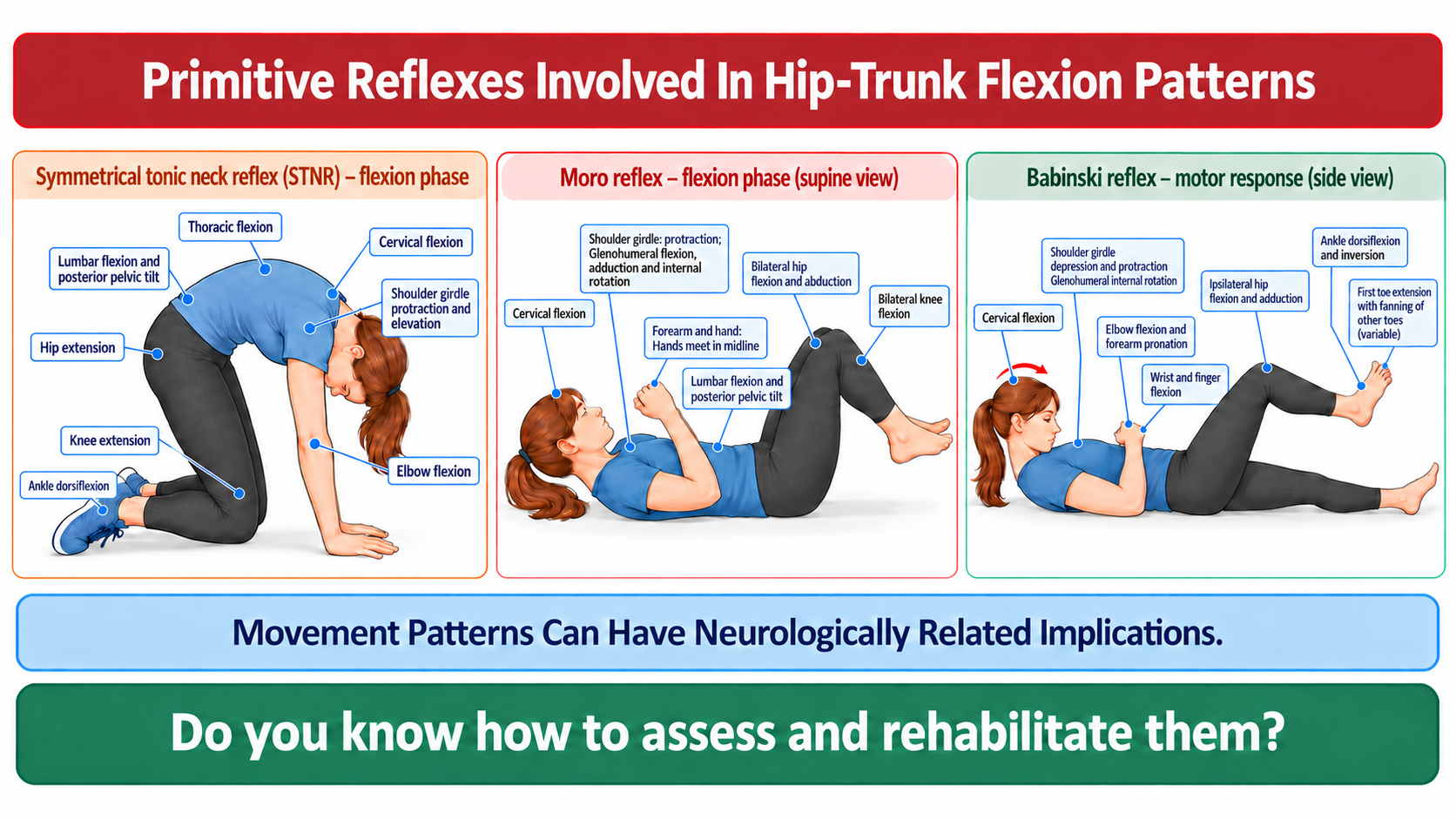
Primitive reflexes have not been researched. Including this is based on my clinical observations. Numerous primitive reflexes can be involved. It’s quite logical to include this category. There are several reflexes stimulated by foot pressure.
Key takeaway: Altered lumbar–hip movement during STS is heterogeneous and may be influenced by movement restrictions, neuromuscular function, sensorimotor regulation, primitive reflexes and task demands. Some of these relationships have experimental support, whereas others remain clinically plausible hypotheses requiring further investigation.
Want to know more about primitive reflexes and how to influence movement? Get in touch.

Leave A Comment