
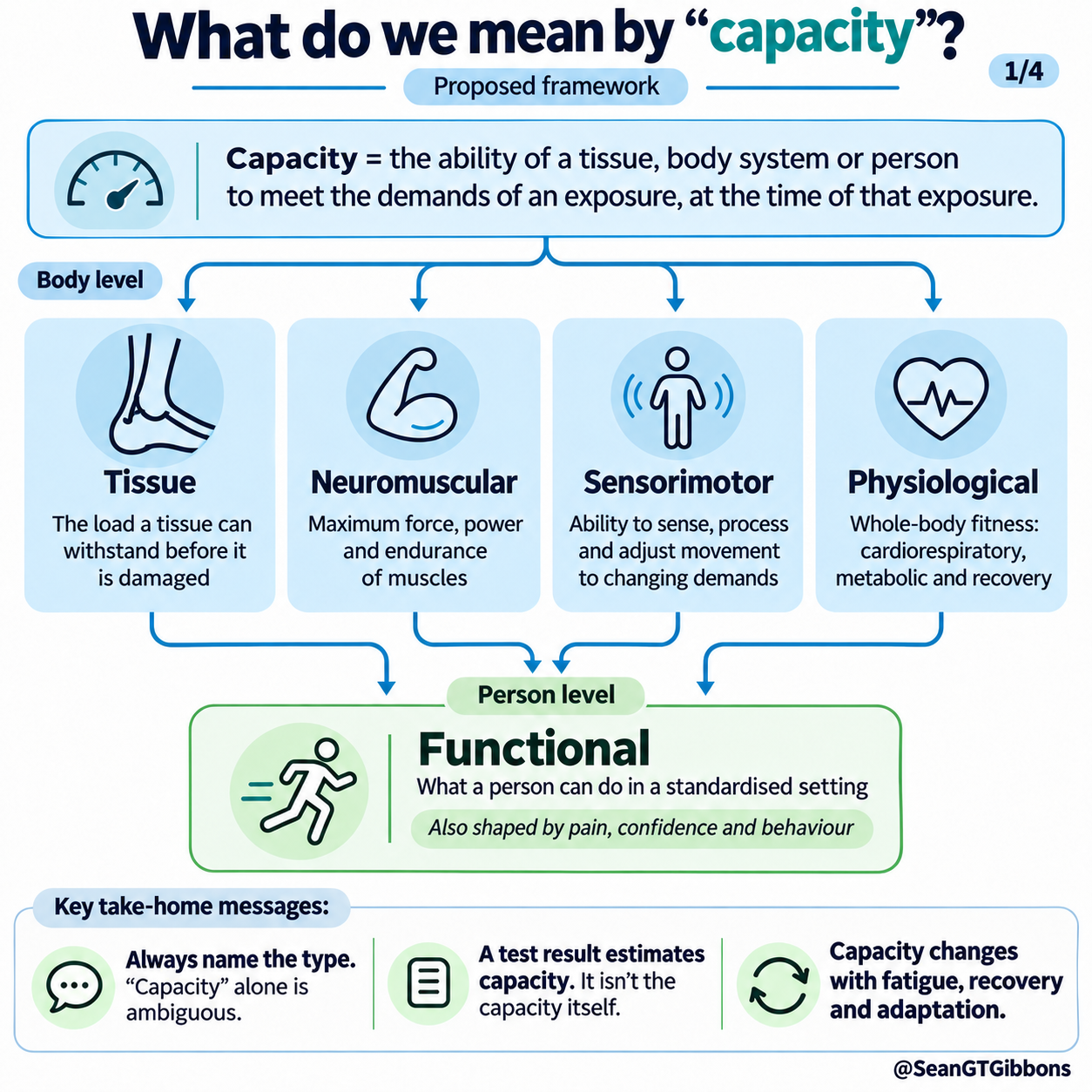
Capacity is one of the most used terms in sports medicine and rehabilitation, and one of the least defined. The same word is used for tissue load tolerance, muscle strength, fitness and what a person can do. That makes it hard to know what we are measuring, what we are targeting, and one of the reasons why someone may not be improving (if you are basing your management on tissue adaptation principles).
There are many schools of thought in rehabilitation.
You can reduce the load (exposure)
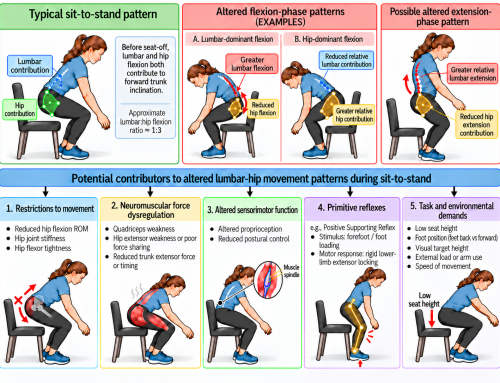
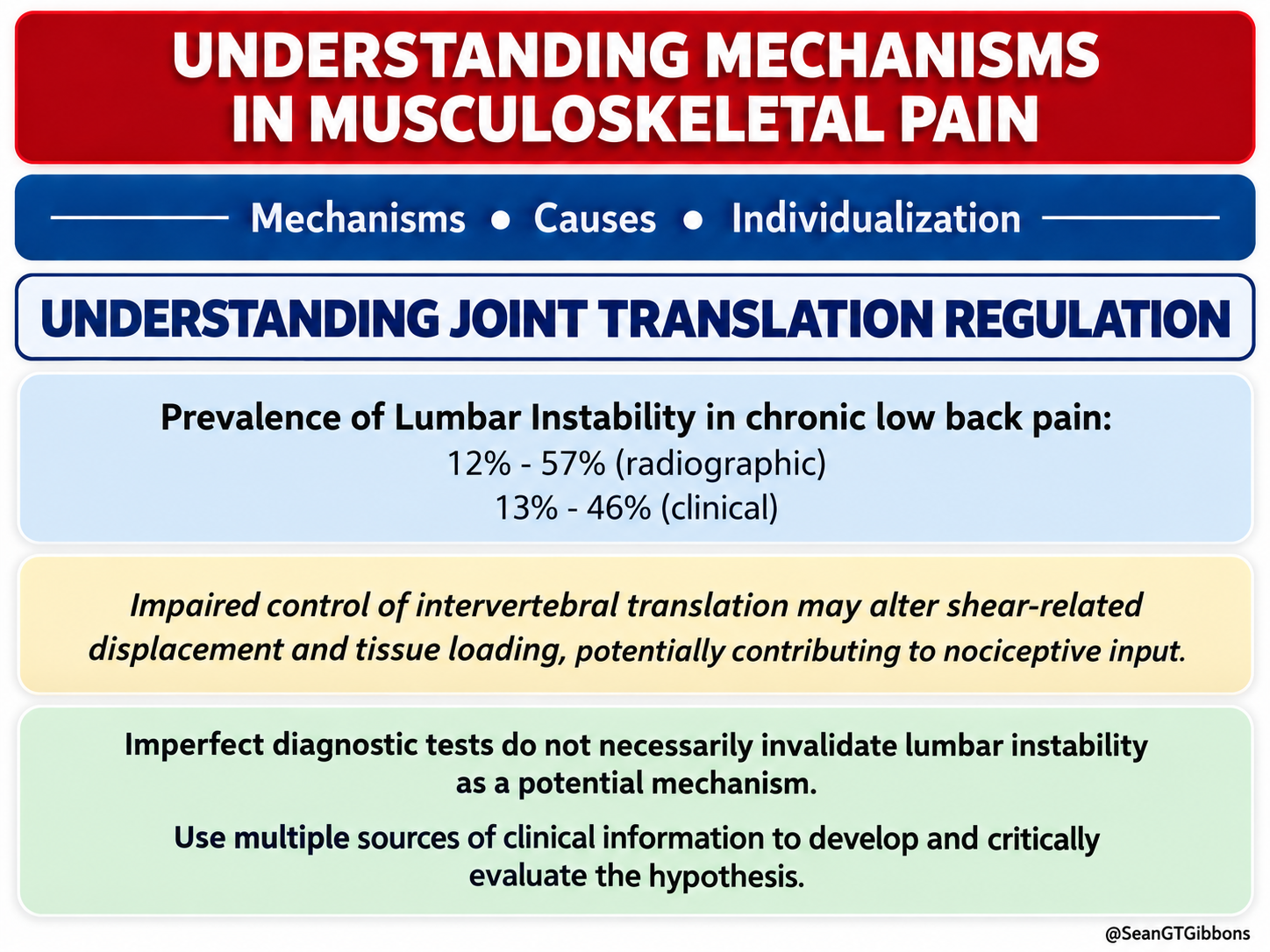
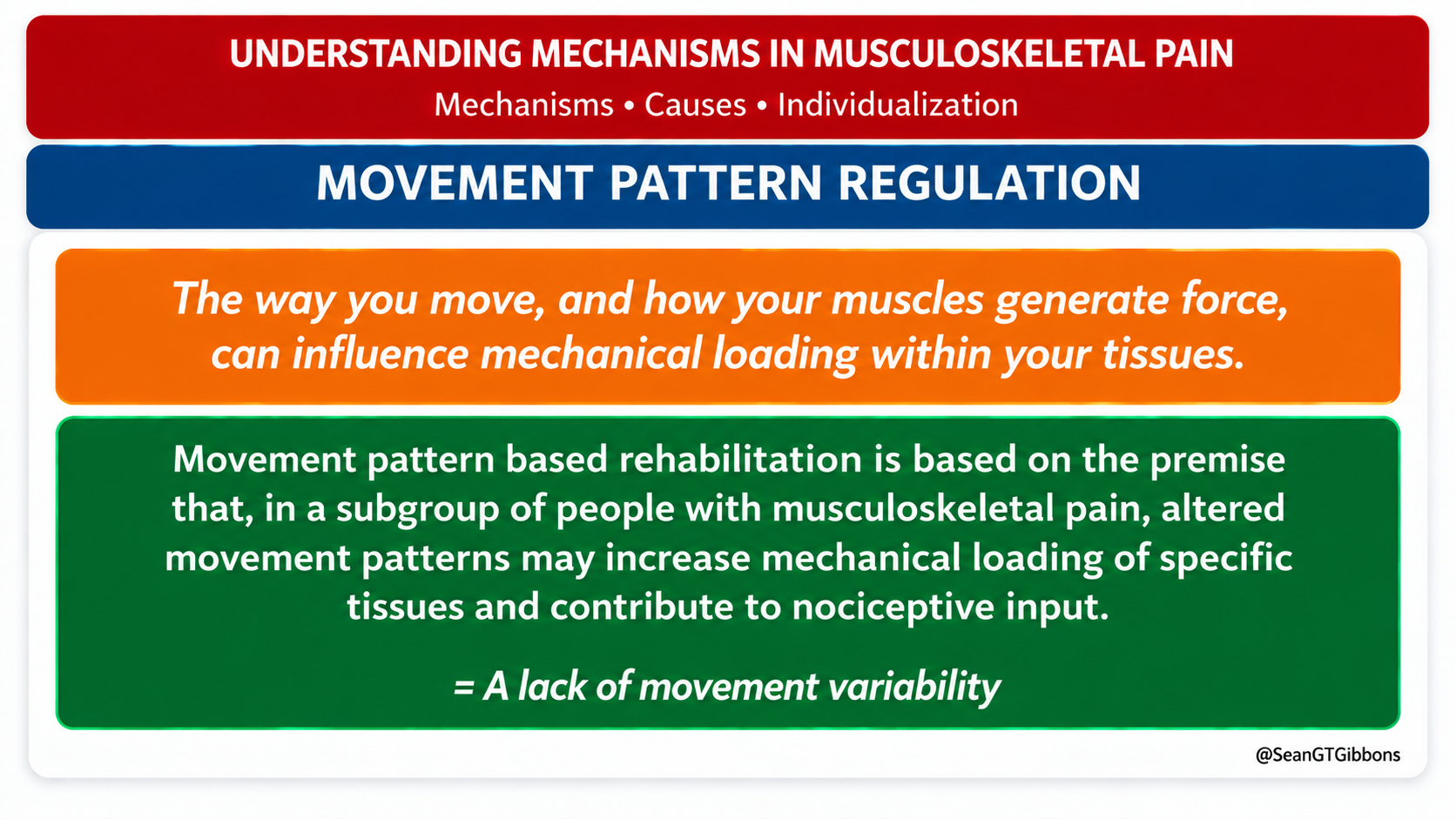
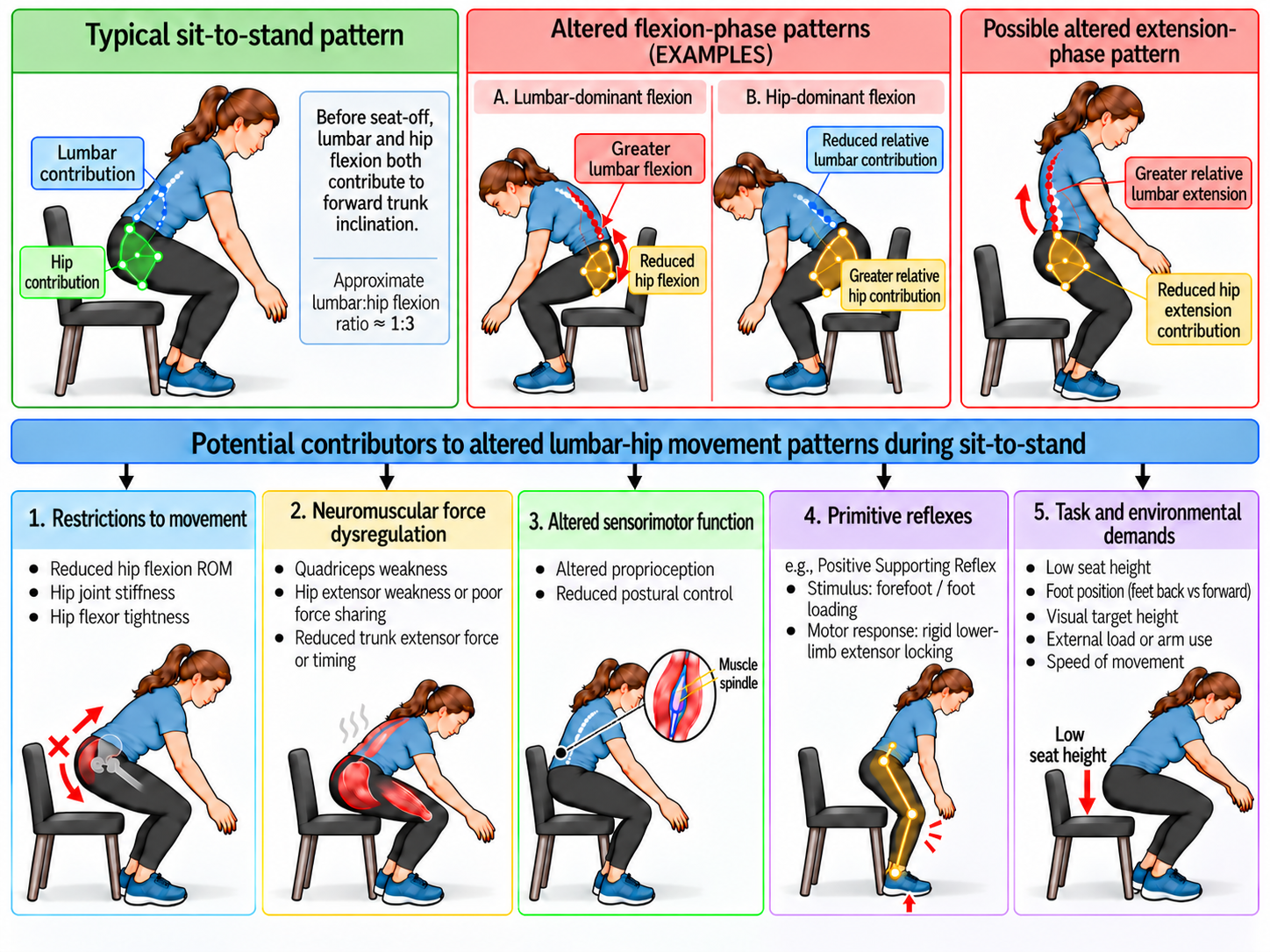
You can make the body better capable of dealing with the external load. There are also many ways to do this. You can target the tissue loading mechanisms (1) movement pattern regulation (2) joint translation regulation (3) neuromuscular force regulation or you can ignore the mechanisms and their causes and take a “Tissue Adaptation Approach” and try to improve “capacity”.
A proposed definition:
Capacity = the ability of a tissue, body system or person to meet the demands of an exposure, at the time of that exposure.
Body level:
• Tissue – the load a tissue can withstand before it is damaged
• Neuromuscular – maximum force, power and endurance of muscles
• Sensorimotor – the ability to sense, process and adjust movement to changing demands
• Physiological – whole-body fitness: cardiorespiratory, metabolic and recovery
Person level:
• Functional – what a person can do in a standardized setting, also shaped by pain, confidence and behaviour
Three take-home messages:
1. Always name the type. “Capacity” alone is ambiguous.
2. A test result estimates capacity. It isn’t the capacity itself.
3. Capacity changes with fatigue, recovery and adaptation.
Another problem term: “tolerance”.
How do you use the term “capacity” in your practice or research? I’d value your thoughts.
#Physiotherapy #PhysicalTherapy #Rehabilitation #SportsMedicine #ChronicPain #ClinicalReasoning

Leave A Comment